Product Selection
How to Source RC Rally and Drift Cars for Retail and Private Label
A B2B guide for choosing RC rally cars, remote control race cars and drift-style toy vehicles by surface, handling, battery setup, durability and retail fit.
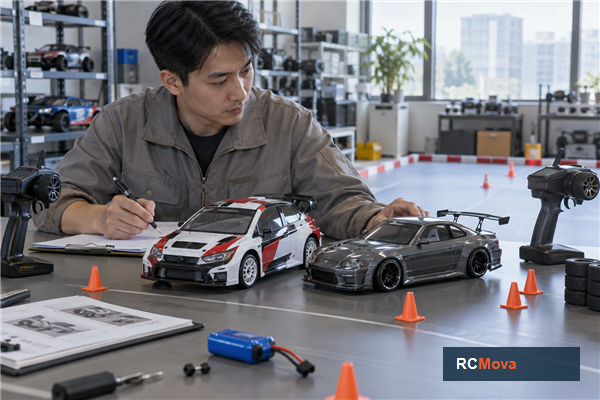
Direct answer: Choose an RC rally or drift car by defining the target driving surface, preferred handling experience, age group, speed perception, chassis protection and service expectations before sample approval. This guide is written for importers, distributors, retailers and private-label teams that need to make a defensible buying decision before they approve an RC toy sample or release an order.
Good RC toy sourcing is a connected process. Product application, customer requirements, factory testing, packaging preparation and shipment inspection all need to point to the same approved configuration. The practical objective is not to add paperwork; it is to make decisions clear enough that the factory, buyer and logistics partners can act without guessing.
Use these articles alongside our RC toy product range, Shenzhen factory overview and quality-control process to turn a buying question into a project brief.
For the connected buying decisions, see How to Source RC Construction Toys for Retail and Private Label, How to Source RC Rock Crawlers for Retail and Private Label, How to Source RC Speed Boats for Retail and Private Label.
1. Separate rally, racing and drift expectations
An RC rally car, a remote control rally car and an RC drift car toy may share a road-focused silhouette, yet each can promise a different play experience.
Rally positioning usually needs versatile road or compact mixed-surface use, while a drift-style product needs predictable sliding on a suitable smooth surface. A buyer should state this application in the brief before comparing vehicles by appearance alone.
During factory testing and shipment preparation, use separate rally, racing and drift expectations as a named handoff. Record the agreed condition, identify the person who checks it, and keep the result with the project file. This does not need to become a complicated report: a controlled product specification, dated sample photos, a packing reference and a short inspection record are often enough to make customer requirements traceable. The important point is that a later sample change, production question or buyer request can be checked against a visible reference rather than memory.
In a real sourcing project, this is also the point at which small assumptions become expensive. A buyer may assume that a controller, accessory, label or carton detail is included because it appeared in an early image; the factory may assume that a request is illustrative because it was not added to the approved file. Ask the team to restate the decision in writing and identify whether it affects the sample, bill of materials, artwork, inspection plan or dispatch documents. That preparation supports a calmer production handoff.
Customer impact matters here because an RC toy is experienced as a complete set. The end user does not separate the product from its controls, accessories, instructions and packaging. Consider how separate rally, racing and drift expectations will appear in a retailer’s receiving process, an e-commerce return, a gift unboxing or a first-use support question. This perspective helps a procurement team prioritize the details that influence product confidence after delivery, not only the details that are easiest to measure at the factory.
Buyer check
Before moving forward, ask the supplier to show how this point is captured in the product brief, approved sample record, production preparation or shipment inspection plan. A clear answer should name the reference, the responsible person and the timing of the check. If the answer cannot be tied to an approved configuration, treat it as an open decision rather than an agreed production instruction.
2. Match the vehicle to the real play surface
Identify whether the intended customer will use the product on smooth indoor flooring, pavement, a driveway or a controlled outdoor play area.
Tire compound and profile, ground clearance, wheelbase, body protection and steering response should be evaluated on representative surfaces. A toy race car remote control program should not imply performance that its selected wheels, chassis or environment cannot reasonably support.
During factory testing and shipment preparation, use match the vehicle to the real play surface as a named handoff. Record the agreed condition, identify the person who checks it, and keep the result with the project file. This does not need to become a complicated report: a controlled product specification, dated sample photos, a packing reference and a short inspection record are often enough to make customer requirements traceable. The important point is that a later sample change, production question or buyer request can be checked against a visible reference rather than memory.
In a real sourcing project, this is also the point at which small assumptions become expensive. A buyer may assume that a controller, accessory, label or carton detail is included because it appeared in an early image; the factory may assume that a request is illustrative because it was not added to the approved file. Ask the team to restate the decision in writing and identify whether it affects the sample, bill of materials, artwork, inspection plan or dispatch documents. That preparation supports a calmer production handoff.
Customer impact matters here because an RC toy is experienced as a complete set. The end user does not separate the product from its controls, accessories, instructions and packaging. Consider how match the vehicle to the real play surface will appear in a retailer’s receiving process, an e-commerce return, a gift unboxing or a first-use support question. This perspective helps a procurement team prioritize the details that influence product confidence after delivery, not only the details that are easiest to measure at the factory.
Buyer check
Before moving forward, ask the supplier to show how this point is captured in the product brief, approved sample record, production preparation or shipment inspection plan. A clear answer should name the reference, the responsible person and the timing of the check. If the answer cannot be tied to an approved configuration, treat it as an open decision rather than an agreed production instruction.
Share your target market, product category and expected quantity for a focused recommendation.
3. Assess controllability alongside speed
Test gradual acceleration, steering precision, braking or reverse response, stability and directional recovery at the intended use level.
For retail, an engaging remote control rally car does not need the highest headline speed. It needs a repeatable and understandable driving experience for the selected age group, with a controller that feels proportionate to the vehicle and the space in which it will be used.
During factory testing and shipment preparation, use assess controllability alongside speed as a named handoff. Record the agreed condition, identify the person who checks it, and keep the result with the project file. This does not need to become a complicated report: a controlled product specification, dated sample photos, a packing reference and a short inspection record are often enough to make customer requirements traceable. The important point is that a later sample change, production question or buyer request can be checked against a visible reference rather than memory.
In a real sourcing project, this is also the point at which small assumptions become expensive. A buyer may assume that a controller, accessory, label or carton detail is included because it appeared in an early image; the factory may assume that a request is illustrative because it was not added to the approved file. Ask the team to restate the decision in writing and identify whether it affects the sample, bill of materials, artwork, inspection plan or dispatch documents. That preparation supports a calmer production handoff.
Customer impact matters here because an RC toy is experienced as a complete set. The end user does not separate the product from its controls, accessories, instructions and packaging. Consider how assess controllability alongside speed will appear in a retailer’s receiving process, an e-commerce return, a gift unboxing or a first-use support question. This perspective helps a procurement team prioritize the details that influence product confidence after delivery, not only the details that are easiest to measure at the factory.
Buyer check
Before moving forward, ask the supplier to show how this point is captured in the product brief, approved sample record, production preparation or shipment inspection plan. A clear answer should name the reference, the responsible person and the timing of the check. If the answer cannot be tied to an approved configuration, treat it as an open decision rather than an agreed production instruction.
4. Review tires, body protection and chassis fit
Inspect wheel seating, tire retention, suspension movement, steering links, bumper sections, body clips or fasteners and the clearance around moving components.
Factory testing should include the agreed driving and steering functions on the production-representative configuration. Record visible wear or fit observations after practical trials, because a glossy sample image cannot show how a selected RC racing car toy handles routine contact and repeated starts.
During factory testing and shipment preparation, use review tires, body protection and chassis fit as a named handoff. Record the agreed condition, identify the person who checks it, and keep the result with the project file. This does not need to become a complicated report: a controlled product specification, dated sample photos, a packing reference and a short inspection record are often enough to make customer requirements traceable. The important point is that a later sample change, production question or buyer request can be checked against a visible reference rather than memory.
In a real sourcing project, this is also the point at which small assumptions become expensive. A buyer may assume that a controller, accessory, label or carton detail is included because it appeared in an early image; the factory may assume that a request is illustrative because it was not added to the approved file. Ask the team to restate the decision in writing and identify whether it affects the sample, bill of materials, artwork, inspection plan or dispatch documents. That preparation supports a calmer production handoff.
Customer impact matters here because an RC toy is experienced as a complete set. The end user does not separate the product from its controls, accessories, instructions and packaging. Consider how review tires, body protection and chassis fit will appear in a retailer’s receiving process, an e-commerce return, a gift unboxing or a first-use support question. This perspective helps a procurement team prioritize the details that influence product confidence after delivery, not only the details that are easiest to measure at the factory.
Buyer check
Before moving forward, ask the supplier to show how this point is captured in the product brief, approved sample record, production preparation or shipment inspection plan. A clear answer should name the reference, the responsible person and the timing of the check. If the answer cannot be tied to an approved configuration, treat it as an open decision rather than an agreed production instruction.
5. Control battery, controller and first-use setup
Verify the radio pairing sequence, battery access, charge method, cable, instructions and any required controller cells as one complete retail workflow.
The finished pack-out must match the approved sample. Clear setup information helps importers and retailers reduce avoidable questions caused by a missing cable, an unclear battery compartment or a controller that cannot be paired as expected.
During factory testing and shipment preparation, use control battery, controller and first-use setup as a named handoff. Record the agreed condition, identify the person who checks it, and keep the result with the project file. This does not need to become a complicated report: a controlled product specification, dated sample photos, a packing reference and a short inspection record are often enough to make customer requirements traceable. The important point is that a later sample change, production question or buyer request can be checked against a visible reference rather than memory.
In a real sourcing project, this is also the point at which small assumptions become expensive. A buyer may assume that a controller, accessory, label or carton detail is included because it appeared in an early image; the factory may assume that a request is illustrative because it was not added to the approved file. Ask the team to restate the decision in writing and identify whether it affects the sample, bill of materials, artwork, inspection plan or dispatch documents. That preparation supports a calmer production handoff.
Customer impact matters here because an RC toy is experienced as a complete set. The end user does not separate the product from its controls, accessories, instructions and packaging. Consider how control battery, controller and first-use setup will appear in a retailer’s receiving process, an e-commerce return, a gift unboxing or a first-use support question. This perspective helps a procurement team prioritize the details that influence product confidence after delivery, not only the details that are easiest to measure at the factory.
Buyer check
Before moving forward, ask the supplier to show how this point is captured in the product brief, approved sample record, production preparation or shipment inspection plan. A clear answer should name the reference, the responsible person and the timing of the check. If the answer cannot be tied to an approved configuration, treat it as an open decision rather than an agreed production instruction.
6. Build a fair supplier comparison
Compare only equivalent vehicle scale, motor and gear configuration, controller, battery arrangement, tire specification, included items, packaging and order quantity.
This makes a commercial comparison useful for private-label teams. Different tire materials, power arrangements, lights, accessories or carton contents can materially change both the customer experience and the quotation, even when the body shape looks almost identical.
During factory testing and shipment preparation, use build a fair supplier comparison as a named handoff. Record the agreed condition, identify the person who checks it, and keep the result with the project file. This does not need to become a complicated report: a controlled product specification, dated sample photos, a packing reference and a short inspection record are often enough to make customer requirements traceable. The important point is that a later sample change, production question or buyer request can be checked against a visible reference rather than memory.
In a real sourcing project, this is also the point at which small assumptions become expensive. A buyer may assume that a controller, accessory, label or carton detail is included because it appeared in an early image; the factory may assume that a request is illustrative because it was not added to the approved file. Ask the team to restate the decision in writing and identify whether it affects the sample, bill of materials, artwork, inspection plan or dispatch documents. That preparation supports a calmer production handoff.
Customer impact matters here because an RC toy is experienced as a complete set. The end user does not separate the product from its controls, accessories, instructions and packaging. Consider how build a fair supplier comparison will appear in a retailer’s receiving process, an e-commerce return, a gift unboxing or a first-use support question. This perspective helps a procurement team prioritize the details that influence product confidence after delivery, not only the details that are easiest to measure at the factory.
Buyer check
Before moving forward, ask the supplier to show how this point is captured in the product brief, approved sample record, production preparation or shipment inspection plan. A clear answer should name the reference, the responsible person and the timing of the check. If the answer cannot be tied to an approved configuration, treat it as an open decision rather than an agreed production instruction.
7. Release the order with evidence
Before dispatch, compare function, appearance, wheel and body fit, accessories, manuals, packaging and carton marks against the approved production reference.
A proportionate shipment inspection turns the sample decision into a delivery check. Agree who records findings, how corrections are verified and who gives final release when a customer requirement or factory-test result needs attention.
During factory testing and shipment preparation, use release the order with evidence as a named handoff. Record the agreed condition, identify the person who checks it, and keep the result with the project file. This does not need to become a complicated report: a controlled product specification, dated sample photos, a packing reference and a short inspection record are often enough to make customer requirements traceable. The important point is that a later sample change, production question or buyer request can be checked against a visible reference rather than memory.
In a real sourcing project, this is also the point at which small assumptions become expensive. A buyer may assume that a controller, accessory, label or carton detail is included because it appeared in an early image; the factory may assume that a request is illustrative because it was not added to the approved file. Ask the team to restate the decision in writing and identify whether it affects the sample, bill of materials, artwork, inspection plan or dispatch documents. That preparation supports a calmer production handoff.
Customer impact matters here because an RC toy is experienced as a complete set. The end user does not separate the product from its controls, accessories, instructions and packaging. Consider how release the order with evidence will appear in a retailer’s receiving process, an e-commerce return, a gift unboxing or a first-use support question. This perspective helps a procurement team prioritize the details that influence product confidence after delivery, not only the details that are easiest to measure at the factory.
Buyer check
Before moving forward, ask the supplier to show how this point is captured in the product brief, approved sample record, production preparation or shipment inspection plan. A clear answer should name the reference, the responsible person and the timing of the check. If the answer cannot be tied to an approved configuration, treat it as an open decision rather than an agreed production instruction.
Reference and compliance note
This article is practical buyer guidance, not legal, safety or transport advice. For the selected product and destination, verify applicable requirements with qualified laboratories, compliance advisers, carriers or authorities. For further reading, see ISO 8124-1:2022 toy safety overview: Mechanical and physical safety considerations for toys.
Photography plan for this article
Article hero image — After the opening section
Image title: How to Source RC Rally and Drift Cars for Retail and Private Label — RC toy sourcing overview
Caption: RCMova factory photograph supporting this buyer guide: Product selection starts with the real play environment and the channel story behind each vehicle format.
ALT text: RCMova factory and product photograph for How to Source RC Rally and Drift Cars for Retail and Private Label
Image size: 600 × 400 px
AI photography prompt: Editorial commercial photography, Asian quality technician testing steering response and drive function of a remote control toy vehicle on a clean Shenzhen factory bench, authentic production lighting, documentary realism, no text, no watermark, 3:2 landscape
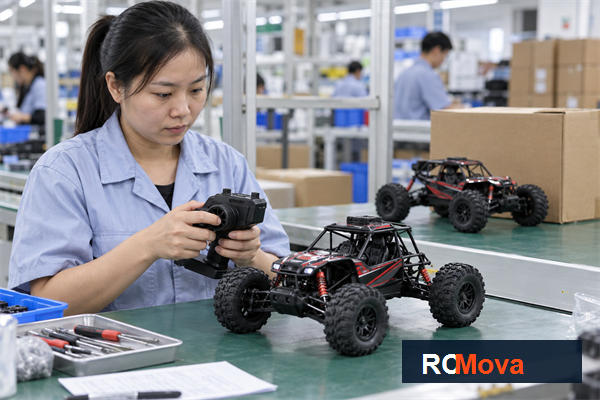
In-article supporting image — Before the FAQ section
Image title: How to Source RC Rally and Drift Cars for Retail and Private Label — RC toy quality and shipment check
Caption: Function checks and inspection records help keep an approved configuration consistent before packing.
ALT text: Asian quality inspector testing an RC vehicle at a Shenzhen factory inspection bench
Image size: 600 × 400 px
AI photography prompt: Realistic documentary factory photography, Asian production team assembling and preparing remote control toy vehicles for export, orderly Shenzhen workshop, natural industrial light, authentic candid composition, no text, no watermark, 3:2 landscape
Frequently Asked Questions
What is the difference between an RC rally car and an RC drift car toy?
A rally-oriented vehicle is typically selected for versatile directional driving, while a drift-style toy is selected for controlled sliding on an appropriate smooth surface. Review the chosen product, tires and stated application rather than relying only on the category name.
What should buyers test on a remote control race car sample?
Test steering and speed response, stability, controller pairing, battery access, wheel fit, body retention, included items and the instructions on the surfaces relevant to the planned retail use.
How can retailers compare drift car suppliers fairly?
Use a single configuration sheet covering vehicle scale, power system, controller, tires, accessories, pack-out, quality checks and order quantity before comparing price or lead time.
Conclusion: turn the decision into a working plan
Choose an RC rally or drift car by defining the target driving surface, preferred handling experience, age group, speed perception, chassis protection and service expectations before sample approval. When the selected product, sample, documentation, inspection points and shipment handoff are visible, the buying team can move with greater confidence and fewer avoidable changes.
Send Your Requirements