User Experience
RC Toy Controller Ergonomics for Retail Buyers
The controller is the product interface. Grip size, trigger travel, button distinction and setup sequence influence whether the RC toy feels intuitive to its intended user.
Direct answer: Evaluate the finished remote with representative users and the actual toy, then refine instructions and control layout before approving retail packaging. This guide is written for importers, distributors, retailers and private-label teams that need to make a defensible buying decision before they approve an RC toy sample or release an order.
Good RC toy sourcing is a connected process. Product application, customer requirements, factory testing, packaging preparation and shipment inspection all need to point to the same approved configuration. The practical objective is not to add paperwork; it is to make decisions clear enough that the factory, buyer and logistics partners can act without guessing.
Use these articles alongside our RC toy product range, Shenzhen factory overview and quality-control process to turn a buying question into a project brief.
For the connected buying decisions, see RC Car vs. RC Truck: How Retail Buyers Choose the Right Category, How to Source RC Construction Toys for Retail and Private Label, How to Source RC Rock Crawlers for Retail and Private Label.
1. Match the intended user
Define age positioning and expected hand size before comparing remote formats.
A pistol grip can work well for one product and feel oversized for another. Do not use an age label as a substitute for usability observation or safety assessment. Review whether the child can hold the controller while operating the main control without accidental inputs, and whether an adult can assist with battery access and setup as intended.
During factory testing and shipment preparation, use match the intended user as a named handoff. Record the agreed condition, identify the person who checks it, and keep the result with the project file. This does not need to become a complicated report: a controlled product specification, dated sample photos, a packing reference and a short inspection record are often enough to make customer requirements traceable. The important point is that a later sample change, production question or buyer request can be checked against a visible reference rather than memory.
Buyer check
Before moving forward, ask the supplier to show how this point is captured in the product brief, approved sample record, production preparation or shipment inspection plan. A clear answer should name the reference, the responsible person and the timing of the check. If the answer cannot be tied to an approved configuration, treat it as an open decision rather than an agreed production instruction.
2. Observe first-use setup
Give a new user the complete retail set and instructions without coaching.
Watch whether they find the power switches, understand the pairing order and can distinguish forward from reverse. Record hesitations rather than explaining them away. A lab engineer who built the toy is not a representative first-time user. A small exploratory study does not prove universal suitability, but it can reveal predictable friction before mass production.
During factory testing and shipment preparation, use observe first-use setup as a named handoff. Record the agreed condition, identify the person who checks it, and keep the result with the project file. This does not need to become a complicated report: a controlled product specification, dated sample photos, a packing reference and a short inspection record are often enough to make customer requirements traceable. The important point is that a later sample change, production question or buyer request can be checked against a visible reference rather than memory.
Buyer check
Before moving forward, ask the supplier to show how this point is captured in the product brief, approved sample record, production preparation or shipment inspection plan. A clear answer should name the reference, the responsible person and the timing of the check. If the answer cannot be tied to an approved configuration, treat it as an open decision rather than an agreed production instruction.
Share your target market, product category and expected quantity for a focused recommendation.
3. Check grip and control reach
Compare trigger, stick or button movement with the actual hand position during play.
A control may be easy to press at a desk but awkward while the child follows a moving vehicle. Look for unintended simultaneous presses, excessive reach and a need to change grip for basic steering. Observe left- and right-handed use where relevant. The correct decision depends on the intended application, not on a fashionable remote shape.
During factory testing and shipment preparation, use check grip and control reach as a named handoff. Record the agreed condition, identify the person who checks it, and keep the result with the project file. This does not need to become a complicated report: a controlled product specification, dated sample photos, a packing reference and a short inspection record are often enough to make customer requirements traceable. The important point is that a later sample change, production question or buyer request can be checked against a visible reference rather than memory.
Buyer check
Before moving forward, ask the supplier to show how this point is captured in the product brief, approved sample record, production preparation or shipment inspection plan. A clear answer should name the reference, the responsible person and the timing of the check. If the answer cannot be tied to an approved configuration, treat it as an open decision rather than an agreed production instruction.
4. Distinguish functions
Use clear physical and visual cues for speed modes, trim, lights and stunt functions.
When two small buttons feel identical, the toy may seem defective even though the electronics work. Avoid adding functions simply because spare buttons are available. The most common first-use actions should be the easiest to find. Test icons and labels on the printed production controller, not only on a large digital rendering.
During factory testing and shipment preparation, use distinguish functions as a named handoff. Record the agreed condition, identify the person who checks it, and keep the result with the project file. This does not need to become a complicated report: a controlled product specification, dated sample photos, a packing reference and a short inspection record are often enough to make customer requirements traceable. The important point is that a later sample change, production question or buyer request can be checked against a visible reference rather than memory.
Buyer check
Before moving forward, ask the supplier to show how this point is captured in the product brief, approved sample record, production preparation or shipment inspection plan. A clear answer should name the reference, the responsible person and the timing of the check. If the answer cannot be tied to an approved configuration, treat it as an open decision rather than an agreed production instruction.
5. Review durability and access
Check grips, antenna area, battery cover and controls after representative handling.
A remote is dropped, squeezed and stored with other toys. Inspect whether the cover remains secure and whether controls return reliably after repeated use. Any small parts or accessible batteries must be reviewed against the relevant safety requirements for the actual age group. Ergonomics and product safety should be considered together.
During factory testing and shipment preparation, use review durability and access as a named handoff. Record the agreed condition, identify the person who checks it, and keep the result with the project file. This does not need to become a complicated report: a controlled product specification, dated sample photos, a packing reference and a short inspection record are often enough to make customer requirements traceable. The important point is that a later sample change, production question or buyer request can be checked against a visible reference rather than memory.
Buyer check
Before moving forward, ask the supplier to show how this point is captured in the product brief, approved sample record, production preparation or shipment inspection plan. A clear answer should name the reference, the responsible person and the timing of the check. If the answer cannot be tied to an approved configuration, treat it as an open decision rather than an agreed production instruction.
6. Test multiple vehicles nearby
Observe whether users can pair and identify the correct car in a realistic retail demo or family setting.
A controller that is comfortable in isolation may still cause confusion when several similar cars are present. Mark remote and vehicle pairs clearly if needed. A simple startup sequence and visible power state can reduce avoidable support tickets. This is separate from radio-range testing; it is about how a user understands which device they control.
During factory testing and shipment preparation, use test multiple vehicles nearby as a named handoff. Record the agreed condition, identify the person who checks it, and keep the result with the project file. This does not need to become a complicated report: a controlled product specification, dated sample photos, a packing reference and a short inspection record are often enough to make customer requirements traceable. The important point is that a later sample change, production question or buyer request can be checked against a visible reference rather than memory.
Buyer check
Before moving forward, ask the supplier to show how this point is captured in the product brief, approved sample record, production preparation or shipment inspection plan. A clear answer should name the reference, the responsible person and the timing of the check. If the answer cannot be tied to an approved configuration, treat it as an open decision rather than an agreed production instruction.
7. Turn observations into approval criteria
Write down the chosen remote version, critical dimensions, instruction steps and acceptable control feel.
A supplier may change molding texture or trigger spring in a later batch. Keep a retained sample and use a short usability check on production units, especially after a redesign. The buyer should approve the controller as part of the complete RC toy, not as a loose accessory offered at the same unit price.
During factory testing and shipment preparation, use turn observations into approval criteria as a named handoff. Record the agreed condition, identify the person who checks it, and keep the result with the project file. This does not need to become a complicated report: a controlled product specification, dated sample photos, a packing reference and a short inspection record are often enough to make customer requirements traceable. The important point is that a later sample change, production question or buyer request can be checked against a visible reference rather than memory.
Buyer check
Before moving forward, ask the supplier to show how this point is captured in the product brief, approved sample record, production preparation or shipment inspection plan. A clear answer should name the reference, the responsible person and the timing of the check. If the answer cannot be tied to an approved configuration, treat it as an open decision rather than an agreed production instruction.
Illustrative buyer scenario
A buyer compares two RC cars with similar speed and price. One uses a compact two-button remote; the other uses a larger pistol-grip controller. Engineers prefer the pistol grip, but an exploratory first-use session with the intended age group shows that some users struggle to reach the reverse control while holding it securely. The team observes the complete setup, including battery cover and pairing, without coaching. Rather than declaring one remote universally better, the buyer matches each interface to the product’s age positioning and play environment. A revised remote texture or trigger spring is checked on the next production sample. The instruction sheet is updated to show the actual grip and power sequence. A qualified safety assessment remains separate from this usability observation; ease of use does not by itself establish age suitability.
Reference and compliance note
This article is practical buyer guidance, not legal, safety or transport advice. For the selected product and destination, verify applicable requirements with qualified laboratories, compliance advisers, carriers or authorities. For further reading, see U.S. CPSC toy safety guidance: Official U.S. information on ASTM F963 and third-party testing.
Photography plan for this article
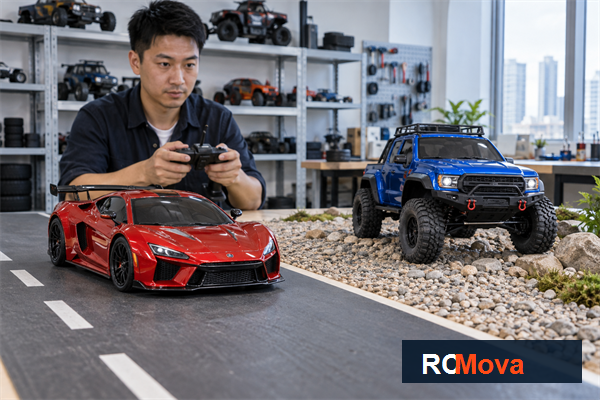
Article hero image — After the opening section
Image title: RC Toy Controller Ergonomics for Retail Buyers — RC toy sourcing overview
Caption: Product selection starts with the real play environment and the channel story behind each vehicle format. Article focus: rc toy controller ergonomics.
ALT text: Remote control car and off-road truck being reviewed in a product selection studio; rc toy controller ergonomics buyer guide
Image size: 600 × 400 px
AI photography prompt: Documentary commercial photography for RC Toy Controller Ergonomics for Retail Buyers, realistic RC toy products and Shenzhen factory setting, Asian staff if people appear, natural light, authentic details, no invented certificates, no text overlays, 3:2 landscape
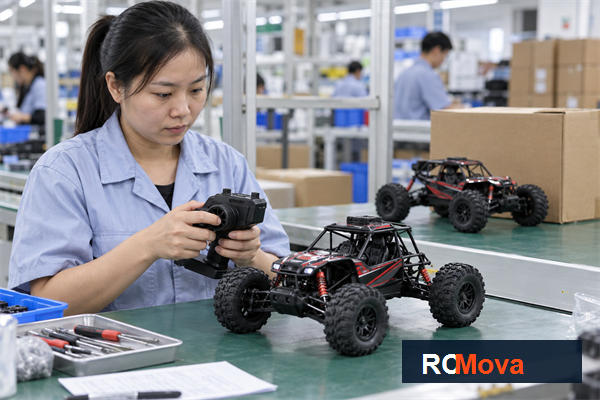
In-article supporting image — Before the FAQ section
Image title: RC Toy Controller Ergonomics for Retail Buyers — RC toy quality and shipment check
Caption: Production review for rc toy controller ergonomics before the export handoff.
ALT text: Asian quality team reviewing rc toy controller ergonomics with a remote control toy at the factory
Image size: 600 × 400 px
AI photography prompt: Realistic editorial photography showing a buyer checking rc toy controller ergonomics against an RC toy sample and shipment records, Asian staff if people appear, natural industrial lighting, no text or fabricated logos, 3:2 landscape
Frequently Asked Questions
What should buyers check first about match the intended user?
Define age positioning and expected hand size before comparing remote formats. A pistol grip can work well for one product and feel oversized for another. Do not use an age label as a substitute for usability observation or safety assessment. Review whether the child can hold the controller while operating the main control without accidental inputs, and whether an adult can assist with battery access and setup as intended.
How should buyers verify distinguish functions?
Use clear physical and visual cues for speed modes, trim, lights and stunt functions. When two small buttons feel identical, the toy may seem defective even though the electronics work. Avoid adding functions simply because spare buttons are available. The most common first-use actions should be the easiest to find. Test icons and labels on the printed production controller, not only on a large digital rendering.
What should be confirmed before shipment?
Write down the chosen remote version, critical dimensions, instruction steps and acceptable control feel. A supplier may change molding texture or trigger spring in a later batch. Keep a retained sample and use a short usability check on production units, especially after a redesign. The buyer should approve the controller as part of the complete RC toy, not as a loose accessory offered at the same unit price.
Conclusion: turn the decision into a working plan
Evaluate the finished remote with representative users and the actual toy, then refine instructions and control layout before approving retail packaging. When the selected product, sample, documentation, inspection points and shipment handoff are visible, the buying team can move with greater confidence and fewer avoidable changes.
Send Your Requirements