Production Quality
First-Article Inspection for RC Toy Production
First-article inspection checks whether the production setup can make the agreed RC toy before a large quantity is completed. It is a focused release gate, not a substitute for ongoing process control or final inspection.
Direct answer: Inspect the first representative production set against the approved baseline, resolve setup differences and authorize continued output only with a recorded disposition. This guide is written for importers, distributors, retailers and private-label teams that need to make a defensible buying decision before they approve an RC toy sample or release an order.
How procurement teams should use this guide
Buyer situation: Buyers want to verify the first units made with mass-production materials and processes before the full lot continues. A development sample can differ from the product produced by the final tools, components, operators and packaging line.
Use the sections below as a discussion framework for the exact product and destination, not as a universal specification. Begin with the approved vehicle, controller, battery, accessories and packaging revision. Mark each point as confirmed, open, not applicable or requiring specialist review, then assign an owner and due date. Evidence should identify the model and production version it covers. When a supplier answer depends on an early sample, a related product or an assumed market rule, keep the point open until the relevant production record, qualified adviser or official source supports the decision. This approach turns research into a controlled sourcing action without implying that one checklist replaces engineering, laboratory, legal, customs or transport expertise.
Good RC toy sourcing is a connected process. Product application, customer requirements, factory testing, packaging preparation and shipment inspection all need to point to the same approved configuration. The practical objective is not to add paperwork; it is to make decisions clear enough that the factory, buyer and logistics partners can act without guessing.
Use these articles alongside our RC toy product range, Shenzhen factory overview and quality-control process to turn a buying question into a project brief.
For the connected buying decisions, see Incoming Motor Inspection for RC Toy Production, How to Evaluate an RC Toy Sample Before Mass Production, Pre-Shipment Inspection for RC Toys: A Buyer’s Practical Guide.
1. Define what counts as the first article
Use a unit made with intended production materials, tools, process settings and normal work instructions.
A showroom sample assembled by engineering may be useful for design approval but does not validate the mass-production route. Record the line, date, shift, model and component revisions behind the selected unit. If packaging is not yet available, limit the release explicitly and schedule a separate filled-pack approval before printing or full packing.
During factory testing and shipment preparation, use define what counts as the first article as a named handoff. Record the agreed condition, identify the person who checks it, and keep the result with the project file. This does not need to become a complicated report: a controlled product specification, dated sample photos, a packing reference and a short inspection record are often enough to make customer requirements traceable. The important point is that a later sample change, production question or buyer request can be checked against a visible reference rather than memory.
Buyer check
Before moving forward, ask the supplier to show how this point is captured in the product brief, approved sample record, production preparation or shipment inspection plan. A clear answer should name the reference, the responsible person and the timing of the check. If the answer cannot be tied to an approved configuration, treat it as an open decision rather than an agreed production instruction.
2. Compare with the controlled baseline
Review the first article against the approved sample, specification, artwork and known-deviation list.
Check identity before appearance or function. A correct-looking body can hide a different PCB, battery or gear set. Use model-specific checkpoints for dimensions, color, included items, labeling and controller operation. Note any approved production change and confirm that related documents and test evidence were updated; verbal approval should not become the new standard.
During factory testing and shipment preparation, use compare with the controlled baseline as a named handoff. Record the agreed condition, identify the person who checks it, and keep the result with the project file. This does not need to become a complicated report: a controlled product specification, dated sample photos, a packing reference and a short inspection record are often enough to make customer requirements traceable. The important point is that a later sample change, production question or buyer request can be checked against a visible reference rather than memory.
Buyer check
Before moving forward, ask the supplier to show how this point is captured in the product brief, approved sample record, production preparation or shipment inspection plan. A clear answer should name the reference, the responsible person and the timing of the check. If the answer cannot be tied to an approved configuration, treat it as an open decision rather than an agreed production instruction.
Share your target market, product category and expected quantity for a focused recommendation.
3. Check setup-sensitive characteristics
Concentrate on features influenced by tooling, fixtures, process settings and operator sequence.
Examples include molded fit, wheel tracking, gear engagement, screw seating, wire routing, paint position, decal alignment and controller pairing. The buyer does not need to measure every characteristic on every unit. The purpose is to find setup errors that could repeat through the lot and to establish which parameters or visual references production must maintain.
During factory testing and shipment preparation, use check setup-sensitive characteristics as a named handoff. Record the agreed condition, identify the person who checks it, and keep the result with the project file. This does not need to become a complicated report: a controlled product specification, dated sample photos, a packing reference and a short inspection record are often enough to make customer requirements traceable. The important point is that a later sample change, production question or buyer request can be checked against a visible reference rather than memory.
Buyer check
Before moving forward, ask the supplier to show how this point is captured in the product brief, approved sample record, production preparation or shipment inspection plan. A clear answer should name the reference, the responsible person and the timing of the check. If the answer cannot be tied to an approved configuration, treat it as an open decision rather than an agreed production instruction.

4. Run the intended function routine
Test the first article using the same basic sequence planned for production, plus targeted engineering observations.
Confirm forward, reverse and steering response, controller pairing, power indication and any model-specific light or stunt function. Observe noise, binding, heat or intermittent behavior without converting one short run into a broad durability claim. Record battery state and surface when they can affect the result, and keep laboratory compliance evidence separate.
During factory testing and shipment preparation, use run the intended function routine as a named handoff. Record the agreed condition, identify the person who checks it, and keep the result with the project file. This does not need to become a complicated report: a controlled product specification, dated sample photos, a packing reference and a short inspection record are often enough to make customer requirements traceable. The important point is that a later sample change, production question or buyer request can be checked against a visible reference rather than memory.
Buyer check
Before moving forward, ask the supplier to show how this point is captured in the product brief, approved sample record, production preparation or shipment inspection plan. A clear answer should name the reference, the responsible person and the timing of the check. If the answer cannot be tied to an approved configuration, treat it as an open decision rather than an agreed production instruction.
5. Review the complete pack-out
Inspect the retail box, insert, controller, cables, manual and identifiers as one sellable set.
First-use failures often originate in missing or mismatched contents rather than vehicle assembly. Confirm that ties or inserts protect the toy without damaging finishes or hiding required markings. Scan identifiers at the consumer and case level. If the first article is unpacked for testing, use another representative set to verify the final closed pack and gross measurements.
During factory testing and shipment preparation, use review the complete pack-out as a named handoff. Record the agreed condition, identify the person who checks it, and keep the result with the project file. This does not need to become a complicated report: a controlled product specification, dated sample photos, a packing reference and a short inspection record are often enough to make customer requirements traceable. The important point is that a later sample change, production question or buyer request can be checked against a visible reference rather than memory.
Buyer check
Before moving forward, ask the supplier to show how this point is captured in the product brief, approved sample record, production preparation or shipment inspection plan. A clear answer should name the reference, the responsible person and the timing of the check. If the answer cannot be tied to an approved configuration, treat it as an open decision rather than an agreed production instruction.
6. Close deviations before release
Classify every difference as accepted, corrected, reworked or requiring buyer decision.
A conditional release should define the affected quantity and the evidence needed for closure. When the setup is adjusted, review several consecutive units rather than only the repaired first piece. Retain before-and-after photographs or measurements. If a change affects safety, compliance or declared performance, stop and obtain qualified review before continuing production.
During factory testing and shipment preparation, use close deviations before release as a named handoff. Record the agreed condition, identify the person who checks it, and keep the result with the project file. This does not need to become a complicated report: a controlled product specification, dated sample photos, a packing reference and a short inspection record are often enough to make customer requirements traceable. The important point is that a later sample change, production question or buyer request can be checked against a visible reference rather than memory.
Buyer check
Before moving forward, ask the supplier to show how this point is captured in the product brief, approved sample record, production preparation or shipment inspection plan. A clear answer should name the reference, the responsible person and the timing of the check. If the answer cannot be tied to an approved configuration, treat it as an open decision rather than an agreed production instruction.
7. Link the result to later inspection
Use the approved first article as a production reference without replacing the original customer-approved baseline.
Final inspection should know which characteristics were sensitive during setup and which corrective action was taken. Preserve the first-article record with lot identity, disposition and approver. If the line changes a material, tool, fixture or major setting later, define whether a new first-article check is required before the affected production resumes.
During factory testing and shipment preparation, use link the result to later inspection as a named handoff. Record the agreed condition, identify the person who checks it, and keep the result with the project file. This does not need to become a complicated report: a controlled product specification, dated sample photos, a packing reference and a short inspection record are often enough to make customer requirements traceable. The important point is that a later sample change, production question or buyer request can be checked against a visible reference rather than memory.
Buyer check
Before moving forward, ask the supplier to show how this point is captured in the product brief, approved sample record, production preparation or shipment inspection plan. A clear answer should name the reference, the responsible person and the timing of the check. If the answer cannot be tied to an approved configuration, treat it as an open decision rather than an agreed production instruction.
Illustrative buyer scenario
An importer approves a hand-built truck sample with smooth steering. The first mass-production unit uses final molded steering parts and pulls slightly left. Instead of accepting the issue as normal toy variation, the team checks linkage seating, wheel alignment and the assembly fixture. A locating feature in the fixture is adjusted, five consecutive units are reviewed and the corrected setup is released. This illustrative buyer scenario demonstrates why the first article must come from production materials and normal operators. A perfect engineering sample cannot show whether the manufacturing setup is centered and repeatable.
Reference and compliance note
This article is practical buyer guidance, not legal, safety or transport advice. For the selected product and destination, verify applicable requirements with qualified laboratories, compliance advisers, carriers or authorities. For further reading, see ISO quality management guidance on external providers: Official ISO auditing guidance on controlling externally provided products and services.
Photography plan for this article
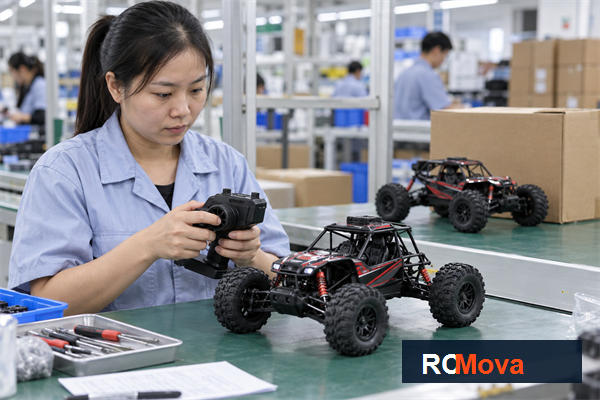
Article hero image — After the opening section
Image title: First-Article Inspection for RC Toy Production — RC toy sourcing overview
Caption: Function checks and inspection records help keep an approved configuration consistent before packing. Article focus: rc toy first article inspection.
ALT text: Asian quality inspector testing an RC vehicle at a Shenzhen factory inspection bench; rc toy first article inspection buyer guide
Image size: 600 × 400 px
AI photography prompt: Documentary commercial photography for First-Article Inspection for RC Toy Production, realistic RC toy products and Shenzhen factory setting, Asian staff if people appear, natural light, authentic details, no invented certificates, no text overlays, 3:2 landscape
In-article supporting image — Before the FAQ section
Image title: First-Article Inspection for RC Toy Production — RC toy quality and shipment check
Caption: Production review for rc toy first article inspection before the export handoff.
ALT text: Asian quality team reviewing rc toy first article inspection with a remote control toy at the factory
Image size: 600 × 400 px
AI photography prompt: Realistic editorial photography showing a buyer checking rc toy first article inspection against an RC toy sample and shipment records, Asian staff if people appear, natural industrial lighting, no text or fabricated logos, 3:2 landscape
Frequently Asked Questions
What should buyers check first about define what counts as the first article?
Use a unit made with intended production materials, tools, process settings and normal work instructions. A showroom sample assembled by engineering may be useful for design approval but does not validate the mass-production route. Record the line, date, shift, model and component revisions behind the selected unit. If packaging is not yet available, limit the release explicitly and schedule a separate filled-pack approval before printing or full packing.
How should buyers verify run the intended function routine?
Test the first article using the same basic sequence planned for production, plus targeted engineering observations. Confirm forward, reverse and steering response, controller pairing, power indication and any model-specific light or stunt function. Observe noise, binding, heat or intermittent behavior without converting one short run into a broad durability claim. Record battery state and surface when they can affect the result, and keep laboratory compliance evidence separate.
What should be confirmed before shipment?
Use the approved first article as a production reference without replacing the original customer-approved baseline. Final inspection should know which characteristics were sensitive during setup and which corrective action was taken. Preserve the first-article record with lot identity, disposition and approver. If the line changes a material, tool, fixture or major setting later, define whether a new first-article check is required before the affected production resumes.
Conclusion: turn the decision into a working plan
Inspect the first representative production set against the approved baseline, resolve setup differences and authorize continued output only with a recorded disposition. When the selected product, sample, documentation, inspection points and shipment handoff are visible, the buying team can move with greater confidence and fewer avoidable changes.
Send Your Requirements