Radio Application
RC Toy Multi-Vehicle Radio Tests for Retail and Events
Multi-vehicle operation depends on the exact radio system, pairing behavior, environment and number of active units.
Direct answer: Test the proposed number of vehicles together under the real demo conditions before making a simultaneous-play claim. This guide is written for importers, distributors, retailers and private-label teams that need to make a defensible buying decision before they approve an RC toy sample or release an order.
Good RC toy sourcing is a connected process. Product application, customer requirements, factory testing, packaging preparation and shipment inspection all need to point to the same approved configuration. The practical objective is not to add paperwork; it is to make decisions clear enough that the factory, buyer and logistics partners can act without guessing.
Use these articles alongside our RC toy product range, Shenzhen factory overview and quality-control process to turn a buying question into a project brief.
For the connected buying decisions, see RC Car vs. RC Truck: How Retail Buyers Choose the Right Category, What Should Buyers Check for Control Range and Radio System When Sourcing Remote Control Toys?, What Should Buyers Check for Control Range and Radio System When Sourcing RC Toys?.
1. Set the use case
Specify number of vehicles, floor area, distance and nearby wireless equipment.
A warehouse test cannot represent a crowded store with many phones and other radio products.
During factory testing and shipment preparation, use set the use case as a named handoff. Record the agreed condition, identify the person who checks it, and keep the result with the project file. This does not need to become a complicated report: a controlled product specification, dated sample photos, a packing reference and a short inspection record are often enough to make customer requirements traceable. The important point is that a later sample change, production question or buyer request can be checked against a visible reference rather than memory.
Customer impact matters here because an RC toy is experienced as a complete set. The end user does not separate the product from its controls, accessories, instructions and packaging. Consider how set the use case will appear in a retailer’s receiving process, an e-commerce return, a gift unboxing or a first-use support question. This perspective helps a procurement team prioritize the details that influence product confidence after delivery, not only the details that are easiest to measure at the factory.
Buyer check
Before moving forward, ask the supplier to show how this point is captured in the product brief, approved sample record, production preparation or shipment inspection plan. A clear answer should name the reference, the responsible person and the timing of the check. If the answer cannot be tied to an approved configuration, treat it as an open decision rather than an agreed production instruction.
2. Identify controller pairing
Label each controller and receiver pair and document startup order.
An unpaired controller can look like interference when the real problem is setup.
During factory testing and shipment preparation, use identify controller pairing as a named handoff. Record the agreed condition, identify the person who checks it, and keep the result with the project file. This does not need to become a complicated report: a controlled product specification, dated sample photos, a packing reference and a short inspection record are often enough to make customer requirements traceable. The important point is that a later sample change, production question or buyer request can be checked against a visible reference rather than memory.
Customer impact matters here because an RC toy is experienced as a complete set. The end user does not separate the product from its controls, accessories, instructions and packaging. Consider how identify controller pairing will appear in a retailer’s receiving process, an e-commerce return, a gift unboxing or a first-use support question. This perspective helps a procurement team prioritize the details that influence product confidence after delivery, not only the details that are easiest to measure at the factory.
Buyer check
Before moving forward, ask the supplier to show how this point is captured in the product brief, approved sample record, production preparation or shipment inspection plan. A clear answer should name the reference, the responsible person and the timing of the check. If the answer cannot be tied to an approved configuration, treat it as an open decision rather than an agreed production instruction.
Share your target market, product category and expected quantity for a focused recommendation.
3. Check frequency behavior
Ask the supplier how the selected radio platform manages simultaneous transmitters.
A 2.4 GHz label alone does not define tested capacity or immunity in every setting.
During factory testing and shipment preparation, use check frequency behavior as a named handoff. Record the agreed condition, identify the person who checks it, and keep the result with the project file. This does not need to become a complicated report: a controlled product specification, dated sample photos, a packing reference and a short inspection record are often enough to make customer requirements traceable. The important point is that a later sample change, production question or buyer request can be checked against a visible reference rather than memory.
Customer impact matters here because an RC toy is experienced as a complete set. The end user does not separate the product from its controls, accessories, instructions and packaging. Consider how check frequency behavior will appear in a retailer’s receiving process, an e-commerce return, a gift unboxing or a first-use support question. This perspective helps a procurement team prioritize the details that influence product confidence after delivery, not only the details that are easiest to measure at the factory.
Buyer check
Before moving forward, ask the supplier to show how this point is captured in the product brief, approved sample record, production preparation or shipment inspection plan. A clear answer should name the reference, the responsible person and the timing of the check. If the answer cannot be tied to an approved configuration, treat it as an open decision rather than an agreed production instruction.
4. Run a group test
Start all vehicles, steer and drive them concurrently, then power cycle one pair.
Observe cross-control, delayed response, lost pairing and recovery time.
During factory testing and shipment preparation, use run a group test as a named handoff. Record the agreed condition, identify the person who checks it, and keep the result with the project file. This does not need to become a complicated report: a controlled product specification, dated sample photos, a packing reference and a short inspection record are often enough to make customer requirements traceable. The important point is that a later sample change, production question or buyer request can be checked against a visible reference rather than memory.
Customer impact matters here because an RC toy is experienced as a complete set. The end user does not separate the product from its controls, accessories, instructions and packaging. Consider how run a group test will appear in a retailer’s receiving process, an e-commerce return, a gift unboxing or a first-use support question. This perspective helps a procurement team prioritize the details that influence product confidence after delivery, not only the details that are easiest to measure at the factory.
Buyer check
Before moving forward, ask the supplier to show how this point is captured in the product brief, approved sample record, production preparation or shipment inspection plan. A clear answer should name the reference, the responsible person and the timing of the check. If the answer cannot be tied to an approved configuration, treat it as an open decision rather than an agreed production instruction.
5. Vary distance and obstacles
Repeat the test around display furniture and normal customer positions.
Line of sight and body shielding can change observed behavior.
During factory testing and shipment preparation, use vary distance and obstacles as a named handoff. Record the agreed condition, identify the person who checks it, and keep the result with the project file. This does not need to become a complicated report: a controlled product specification, dated sample photos, a packing reference and a short inspection record are often enough to make customer requirements traceable. The important point is that a later sample change, production question or buyer request can be checked against a visible reference rather than memory.
Customer impact matters here because an RC toy is experienced as a complete set. The end user does not separate the product from its controls, accessories, instructions and packaging. Consider how vary distance and obstacles will appear in a retailer’s receiving process, an e-commerce return, a gift unboxing or a first-use support question. This perspective helps a procurement team prioritize the details that influence product confidence after delivery, not only the details that are easiest to measure at the factory.
Buyer check
Before moving forward, ask the supplier to show how this point is captured in the product brief, approved sample record, production preparation or shipment inspection plan. A clear answer should name the reference, the responsible person and the timing of the check. If the answer cannot be tied to an approved configuration, treat it as an open decision rather than an agreed production instruction.
6. Record failures precisely
Log vehicle ID, controller ID, location, battery state and symptom.
A reproducible record lets engineering distinguish congestion, low voltage and unit defects.
During factory testing and shipment preparation, use record failures precisely as a named handoff. Record the agreed condition, identify the person who checks it, and keep the result with the project file. This does not need to become a complicated report: a controlled product specification, dated sample photos, a packing reference and a short inspection record are often enough to make customer requirements traceable. The important point is that a later sample change, production question or buyer request can be checked against a visible reference rather than memory.
Customer impact matters here because an RC toy is experienced as a complete set. The end user does not separate the product from its controls, accessories, instructions and packaging. Consider how record failures precisely will appear in a retailer’s receiving process, an e-commerce return, a gift unboxing or a first-use support question. This perspective helps a procurement team prioritize the details that influence product confidence after delivery, not only the details that are easiest to measure at the factory.
Buyer check
Before moving forward, ask the supplier to show how this point is captured in the product brief, approved sample record, production preparation or shipment inspection plan. A clear answer should name the reference, the responsible person and the timing of the check. If the answer cannot be tied to an approved configuration, treat it as an open decision rather than an agreed production instruction.
7. Approve a limited claim
State the number and conditions actually demonstrated.
Avoid promising unlimited simultaneous play when the specific production set has not been validated.
During factory testing and shipment preparation, use approve a limited claim as a named handoff. Record the agreed condition, identify the person who checks it, and keep the result with the project file. This does not need to become a complicated report: a controlled product specification, dated sample photos, a packing reference and a short inspection record are often enough to make customer requirements traceable. The important point is that a later sample change, production question or buyer request can be checked against a visible reference rather than memory.
Customer impact matters here because an RC toy is experienced as a complete set. The end user does not separate the product from its controls, accessories, instructions and packaging. Consider how approve a limited claim will appear in a retailer’s receiving process, an e-commerce return, a gift unboxing or a first-use support question. This perspective helps a procurement team prioritize the details that influence product confidence after delivery, not only the details that are easiest to measure at the factory.
Buyer check
Before moving forward, ask the supplier to show how this point is captured in the product brief, approved sample record, production preparation or shipment inspection plan. A clear answer should name the reference, the responsible person and the timing of the check. If the answer cannot be tied to an approved configuration, treat it as an open decision rather than an agreed production instruction.
Reference and compliance note
This article is practical buyer guidance, not legal, safety or transport advice. For the selected product and destination, verify applicable requirements with qualified laboratories, compliance advisers, carriers or authorities. For further reading, see FCC equipment authorization guidance: Official radio-frequency equipment authorization guidance.
Photography plan for this article
Article hero image — After the opening section
Image title: RC Toy Multi-Vehicle Radio Tests for Retail and Events — RC toy sourcing overview
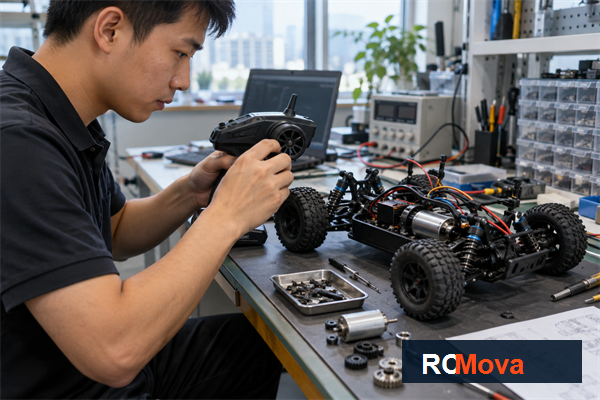
Caption: Controller selection should be tested as part of the complete vehicle and user experience. Article focus: rc toy multiple cars at once.
ALT text: Asian electronics technician testing an RC controller and vehicle components; rc toy multiple cars at once buyer guide
Image size: 600 × 400 px
AI photography prompt: Documentary commercial photography for RC Toy Multi-Vehicle Radio Tests for Retail and Events, realistic RC toy products and Shenzhen factory setting, Asian staff if people appear, natural light, authentic details, no invented certificates, no text overlays, 3:2 landscape
In-article supporting image — Before the FAQ section
Image title: RC Toy Multi-Vehicle Radio Tests for Retail and Events — RC toy quality and shipment check
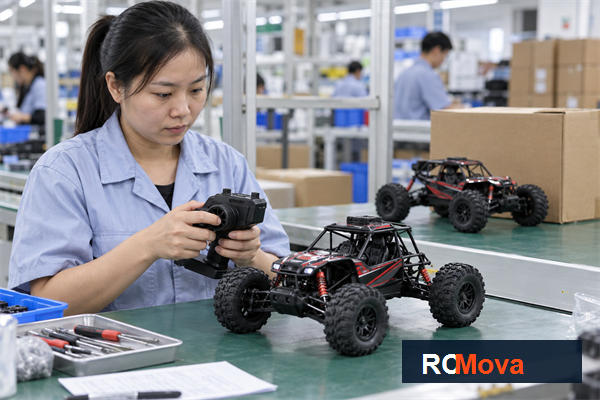
Caption: Production review for rc toy multiple cars at once before the export handoff.
ALT text: Asian quality team reviewing rc toy multiple cars at once with a remote control toy at the factory
Image size: 600 × 400 px
AI photography prompt: Realistic editorial photography showing a buyer checking rc toy multiple cars at once against an RC toy sample and shipment records, Asian staff if people appear, natural industrial lighting, no text or fabricated logos, 3:2 landscape
Frequently Asked Questions
What should buyers check first about set the use case?
Specify number of vehicles, floor area, distance and nearby wireless equipment. A warehouse test cannot represent a crowded store with many phones and other radio products.
How should buyers verify run a group test?
Start all vehicles, steer and drive them concurrently, then power cycle one pair. Observe cross-control, delayed response, lost pairing and recovery time.
What should be confirmed before shipment?
State the number and conditions actually demonstrated. Avoid promising unlimited simultaneous play when the specific production set has not been validated.
Conclusion: turn the decision into a working plan
Test the proposed number of vehicles together under the real demo conditions before making a simultaneous-play claim. When the selected product, sample, documentation, inspection points and shipment handoff are visible, the buying team can move with greater confidence and fewer avoidable changes.
Send Your Requirements