Production Preparation
RC Toy Pre-Production Meetings: Buyer Checklist
A pre-production meeting converts the approved RC toy and purchase order into a shared manufacturing plan. It should close configuration questions before the factory spends material or prints destination-specific packaging.

Direct answer: Review the final product, documents, process risks, inspection criteria and schedule with named owners, then issue one controlled meeting record before production release. This guide is written for importers, distributors, retailers and private-label teams that need to make a defensible buying decision before they approve an RC toy sample or release an order.
How procurement teams should use this guide
Buyer situation: Private-label and importing teams need a structured order kickoff before materials and mass production are released. Sample approval alone may not align artwork, component revisions, test methods, packing and delivery responsibilities.
Use the sections below as a discussion framework for the exact product and destination, not as a universal specification. Begin with the approved vehicle, controller, battery, accessories and packaging revision. Mark each point as confirmed, open, not applicable or requiring specialist review, then assign an owner and due date. Evidence should identify the model and production version it covers. When a supplier answer depends on an early sample, a related product or an assumed market rule, keep the point open until the relevant production record, qualified adviser or official source supports the decision. This approach turns research into a controlled sourcing action without implying that one checklist replaces engineering, laboratory, legal, customs or transport expertise.
Good RC toy sourcing is a connected process. Product application, customer requirements, factory testing, packaging preparation and shipment inspection all need to point to the same approved configuration. The practical objective is not to add paperwork; it is to make decisions clear enough that the factory, buyer and logistics partners can act without guessing.
Use these articles alongside our RC toy product range, Shenzhen factory overview and quality-control process to turn a buying question into a project brief.
For the connected buying decisions, see RC Toy Sourcing Checklist: What to Confirm Before You Place an Order, How to Evaluate an RC Toy Sample Before Mass Production, RC Toy Quality Control Checklist for B2B Orders.
1. Confirm the production baseline
Place the approved sample, specification, bill of materials and purchase order revision in the same review.
Read the model code, color, controller, battery, charger, accessories and included documents aloud or on screen. Photograph or identify the sealed sample used as the physical reference. If the sample contains a deviation that will be corrected in production, record it clearly so inspectors do not treat the deviation as the standard. Release should apply only to the listed revision.
During factory testing and shipment preparation, use confirm the production baseline as a named handoff. Record the agreed condition, identify the person who checks it, and keep the result with the project file. This does not need to become a complicated report: a controlled product specification, dated sample photos, a packing reference and a short inspection record are often enough to make customer requirements traceable. The important point is that a later sample change, production question or buyer request can be checked against a visible reference rather than memory.
Buyer check
Before moving forward, ask the supplier to show how this point is captured in the product brief, approved sample record, production preparation or shipment inspection plan. A clear answer should name the reference, the responsible person and the timing of the check. If the answer cannot be tied to an approved configuration, treat it as an open decision rather than an agreed production instruction.
2. Review artwork and market versions
Match every carton, label, manual and barcode file to the destination SKU that will receive it.
Check language, importer details, age statement, warning placement, product identifier and included-item claims against the final pack. Confirm who approves legal or compliance content; a factory layout check is not a substitute for market-specific advice. Use printed proofs when size and readability matter. Assign a code and revision to each file placed on the packing bill of materials.
During factory testing and shipment preparation, use review artwork and market versions as a named handoff. Record the agreed condition, identify the person who checks it, and keep the result with the project file. This does not need to become a complicated report: a controlled product specification, dated sample photos, a packing reference and a short inspection record are often enough to make customer requirements traceable. The important point is that a later sample change, production question or buyer request can be checked against a visible reference rather than memory.
Buyer check
Before moving forward, ask the supplier to show how this point is captured in the product brief, approved sample record, production preparation or shipment inspection plan. A clear answer should name the reference, the responsible person and the timing of the check. If the answer cannot be tied to an approved configuration, treat it as an open decision rather than an agreed production instruction.
Share your target market, product category and expected quantity for a focused recommendation.
3. Walk through the assembly sequence
Ask production and quality staff to explain how critical parts become a finished, paired RC toy set.
The discussion should cover polarity-sensitive wiring, wheel or steering assembly, screw control, controller pairing and accessory insertion. Identify points where similar components or color variants can be mixed. Decide whether a visual aid, fixture, first-piece check or line clearance is needed. This practical route review is more useful than a generic assurance that workers are experienced.
During factory testing and shipment preparation, use walk through the assembly sequence as a named handoff. Record the agreed condition, identify the person who checks it, and keep the result with the project file. This does not need to become a complicated report: a controlled product specification, dated sample photos, a packing reference and a short inspection record are often enough to make customer requirements traceable. The important point is that a later sample change, production question or buyer request can be checked against a visible reference rather than memory.
Buyer check
Before moving forward, ask the supplier to show how this point is captured in the product brief, approved sample record, production preparation or shipment inspection plan. A clear answer should name the reference, the responsible person and the timing of the check. If the answer cannot be tied to an approved configuration, treat it as an open decision rather than an agreed production instruction.
4. Define factory testing
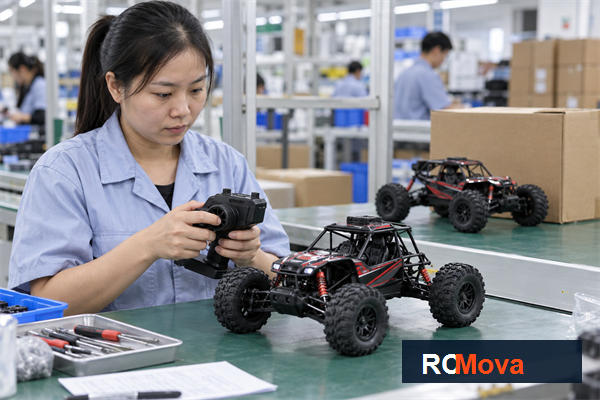
State the function, sample frequency, equipment, acceptance condition and record for each planned check.
For example, steering direction, forward and reverse drive, controller response, charging indication and accessory presence may require different controls. Do not describe an informal demonstration as a complete safety or compliance test. Separate production function checks from laboratory testing and from buyer shipment inspection, and keep each linked to the finished configuration it actually covers.
During factory testing and shipment preparation, use define factory testing as a named handoff. Record the agreed condition, identify the person who checks it, and keep the result with the project file. This does not need to become a complicated report: a controlled product specification, dated sample photos, a packing reference and a short inspection record are often enough to make customer requirements traceable. The important point is that a later sample change, production question or buyer request can be checked against a visible reference rather than memory.
Buyer check
Before moving forward, ask the supplier to show how this point is captured in the product brief, approved sample record, production preparation or shipment inspection plan. A clear answer should name the reference, the responsible person and the timing of the check. If the answer cannot be tied to an approved configuration, treat it as an open decision rather than an agreed production instruction.
5. Confirm defect and escalation rules
Translate subjective quality expectations into examples and decision owners before the first lot appears.
Use the approved sample and photographs to define unacceptable scratches, color mismatch, wheel alignment, printing errors or missing contents. Agree who can stop the line and who approves rework or deviation. A pre-production meeting should not attempt to predict every defect, but it should establish how unexpected issues are contained and communicated before more units are affected.
During factory testing and shipment preparation, use confirm defect and escalation rules as a named handoff. Record the agreed condition, identify the person who checks it, and keep the result with the project file. This does not need to become a complicated report: a controlled product specification, dated sample photos, a packing reference and a short inspection record are often enough to make customer requirements traceable. The important point is that a later sample change, production question or buyer request can be checked against a visible reference rather than memory.
Buyer check
Before moving forward, ask the supplier to show how this point is captured in the product brief, approved sample record, production preparation or shipment inspection plan. A clear answer should name the reference, the responsible person and the timing of the check. If the answer cannot be tied to an approved configuration, treat it as an open decision rather than an agreed production instruction.
6. Build the dated order plan
Connect material arrival, first production, in-process review, packing, inspection and dispatch dates.
Include buyer approvals as dependencies. If artwork or payment arrives late, the plan should show which downstream dates move rather than keeping an impossible shipment promise. Identify the last date for changes without disrupting the line. For mixed SKUs, use separate milestone rows so progress on the easiest model does not conceal delay on the critical version.
During factory testing and shipment preparation, use build the dated order plan as a named handoff. Record the agreed condition, identify the person who checks it, and keep the result with the project file. This does not need to become a complicated report: a controlled product specification, dated sample photos, a packing reference and a short inspection record are often enough to make customer requirements traceable. The important point is that a later sample change, production question or buyer request can be checked against a visible reference rather than memory.
Buyer check
Before moving forward, ask the supplier to show how this point is captured in the product brief, approved sample record, production preparation or shipment inspection plan. A clear answer should name the reference, the responsible person and the timing of the check. If the answer cannot be tied to an approved configuration, treat it as an open decision rather than an agreed production instruction.
7. Issue actions and release status
End with an owner, due date and status for every open point.
Classify the order as released, conditionally released or on hold. A conditional release should state exactly which activity may proceed and which cannot. Distribute the record to sales, engineering, quality, production and the buyer. At first-article review, check that the actions were closed in the physical product and packaging rather than assuming completion from email alone.
During factory testing and shipment preparation, use issue actions and release status as a named handoff. Record the agreed condition, identify the person who checks it, and keep the result with the project file. This does not need to become a complicated report: a controlled product specification, dated sample photos, a packing reference and a short inspection record are often enough to make customer requirements traceable. The important point is that a later sample change, production question or buyer request can be checked against a visible reference rather than memory.
Buyer check
Before moving forward, ask the supplier to show how this point is captured in the product brief, approved sample record, production preparation or shipment inspection plan. A clear answer should name the reference, the responsible person and the timing of the check. If the answer cannot be tied to an approved configuration, treat it as an open decision rather than an agreed production instruction.
Illustrative buyer scenario
Suppose an approved RC buggy sample uses a USB charging lead and a plain carton, while the final order adds a branded gift box and a destination-specific manual. At kickoff, engineering confirms the charger, artwork checks the warning panel, quality defines the pairing test and logistics verifies the master-carton count. The group discovers that the carton dieline still reflects the earlier accessory tray. Production is held until a filled packaging proof is approved. In this illustrative buyer scenario, a short hold before printing prevents a large rework after finished toys are packed. The value of the meeting comes from resolving cross-functional conflicts, not from collecting signatures on an agenda.
Reference and compliance note
This article is practical buyer guidance, not legal, safety or transport advice. For the selected product and destination, verify applicable requirements with qualified laboratories, compliance advisers, carriers or authorities. For further reading, see ISO quality management guidance on external providers: Official ISO auditing guidance on controlling externally provided products and services.
Photography plan for this article
Article hero image — After the opening section
Image title: RC Toy Pre-Production Meetings: Buyer Checklist — RC toy sourcing overview
Caption: An OEM or ODM discussion is clearer when product samples, controllers and packaging direction are reviewed together. Article focus: rc toy pre production meeting.
ALT text: Asian toy engineers reviewing RC vehicle body shells and packaging samples in Shenzhen; rc toy pre production meeting buyer guide
Image size: 600 × 400 px
AI photography prompt: Documentary commercial photography for RC Toy Pre-Production Meetings: Buyer Checklist, realistic RC toy products and Shenzhen factory setting, Asian staff if people appear, natural light, authentic details, no invented certificates, no text overlays, 3:2 landscape
In-article supporting image — Before the FAQ section
Image title: RC Toy Pre-Production Meetings: Buyer Checklist — RC toy quality and shipment check
Caption: Production review for rc toy pre production meeting before the export handoff.
ALT text: Asian quality team reviewing rc toy pre production meeting with a remote control toy at the factory
Image size: 600 × 400 px
AI photography prompt: Realistic editorial photography showing a buyer checking rc toy pre production meeting against an RC toy sample and shipment records, Asian staff if people appear, natural industrial lighting, no text or fabricated logos, 3:2 landscape
Frequently Asked Questions
What should buyers check first about confirm the production baseline?
Place the approved sample, specification, bill of materials and purchase order revision in the same review. Read the model code, color, controller, battery, charger, accessories and included documents aloud or on screen. Photograph or identify the sealed sample used as the physical reference. If the sample contains a deviation that will be corrected in production, record it clearly so inspectors do not treat the deviation as the standard. Release should apply only to the listed revision.
How should buyers verify define factory testing?
State the function, sample frequency, equipment, acceptance condition and record for each planned check. For example, steering direction, forward and reverse drive, controller response, charging indication and accessory presence may require different controls. Do not describe an informal demonstration as a complete safety or compliance test. Separate production function checks from laboratory testing and from buyer shipment inspection, and keep each linked to the finished configuration it actually covers.
What should be confirmed before shipment?
End with an owner, due date and status for every open point. Classify the order as released, conditionally released or on hold. A conditional release should state exactly which activity may proceed and which cannot. Distribute the record to sales, engineering, quality, production and the buyer. At first-article review, check that the actions were closed in the physical product and packaging rather than assuming completion from email alone.
Conclusion: turn the decision into a working plan
Review the final product, documents, process risks, inspection criteria and schedule with named owners, then issue one controlled meeting record before production release. When the selected product, sample, documentation, inspection points and shipment handoff are visible, the buying team can move with greater confidence and fewer avoidable changes.
Send Your Requirements