Assembly Control
RC Toy Screw Torque and Fastener Retention
Fastener quality is a joint-system question involving screw design, mating material, hole geometry, driver setting, access and assembly sequence. A single universal torque value is not appropriate for every RC toy joint.
Direct answer: Identify critical fasteners, validate joint-specific settings and inspection methods, and control drivers, rework and records throughout the production run. This guide is written for importers, distributors, retailers and private-label teams that need to make a defensible buying decision before they approve an RC toy sample or release an order.
How procurement teams should use this guide
Buyer situation: Buyers need stable assembly joints without stripped plastic, loose covers or inconsistent wheel and chassis retention. Small fasteners can be overdriven or left loose when tool settings, part geometry and operator sequence are not controlled.
Use the sections below as a discussion framework for the exact product and destination, not as a universal specification. Begin with the approved vehicle, controller, battery, accessories and packaging revision. Mark each point as confirmed, open, not applicable or requiring specialist review, then assign an owner and due date. Evidence should identify the model and production version it covers. When a supplier answer depends on an early sample, a related product or an assumed market rule, keep the point open until the relevant production record, qualified adviser or official source supports the decision. This approach turns research into a controlled sourcing action without implying that one checklist replaces engineering, laboratory, legal, customs or transport expertise.
Good RC toy sourcing is a connected process. Product application, customer requirements, factory testing, packaging preparation and shipment inspection all need to point to the same approved configuration. The practical objective is not to add paperwork; it is to make decisions clear enough that the factory, buyer and logistics partners can act without guessing.
Use these articles alongside our RC toy product range, Shenzhen factory overview and quality-control process to turn a buying question into a project brief.
For the connected buying decisions, see RC Toy Gearing, Drivetrain and Torque: Sourcing Guide, RC Toy Packaging Inserts and Accessory Retention, RC Toy Gear Ratio and Torque Selection for Buyers.
1. Identify critical joints
Rank fasteners by their effect on accessible parts, battery access, steering, wheels, chassis and electronics protection.
Not every cosmetic screw needs the same control as a battery-cover or wheel-retention fastener. Create a visual map with screw type, length and location. Similar screws should be differentiated by bins or poka-yoke where a mix could damage the product. Involve product-safety expertise when a loose part could create a hazard for the intended age group.
During factory testing and shipment preparation, use identify critical joints as a named handoff. Record the agreed condition, identify the person who checks it, and keep the result with the project file. This does not need to become a complicated report: a controlled product specification, dated sample photos, a packing reference and a short inspection record are often enough to make customer requirements traceable. The important point is that a later sample change, production question or buyer request can be checked against a visible reference rather than memory.
Buyer check
Before moving forward, ask the supplier to show how this point is captured in the product brief, approved sample record, production preparation or shipment inspection plan. A clear answer should name the reference, the responsible person and the timing of the check. If the answer cannot be tied to an approved configuration, treat it as an open decision rather than an agreed production instruction.
2. Validate the complete joint
Check screw, boss or insert, material, pilot hole and assembly sequence together.
Torque alone cannot correct a poorly designed plastic post or wrong screw length. Use intended production parts and account for molding variation. Examine seating, cracking, thread formation and clamp behavior. If a metal insert or nut is used, confirm it is retained and aligned. Preserve engineering rationale rather than copying a setting from another model.
During factory testing and shipment preparation, use validate the complete joint as a named handoff. Record the agreed condition, identify the person who checks it, and keep the result with the project file. This does not need to become a complicated report: a controlled product specification, dated sample photos, a packing reference and a short inspection record are often enough to make customer requirements traceable. The important point is that a later sample change, production question or buyer request can be checked against a visible reference rather than memory.
Buyer check
Before moving forward, ask the supplier to show how this point is captured in the product brief, approved sample record, production preparation or shipment inspection plan. A clear answer should name the reference, the responsible person and the timing of the check. If the answer cannot be tied to an approved configuration, treat it as an open decision rather than an agreed production instruction.
Share your target market, product category and expected quantity for a focused recommendation.
3. Set up controlled drivers
Use an appropriate tool and verified setting for joints where assembly variation matters.
Document the tool identification, bit, setting and verification frequency. A numeric driver display is not proof that torque reaches the joint correctly; tool maintenance, bit wear and operator angle can affect the result. For manual operations, define a practical method that prevents repeated tightening after the screw is seated.
During factory testing and shipment preparation, use set up controlled drivers as a named handoff. Record the agreed condition, identify the person who checks it, and keep the result with the project file. This does not need to become a complicated report: a controlled product specification, dated sample photos, a packing reference and a short inspection record are often enough to make customer requirements traceable. The important point is that a later sample change, production question or buyer request can be checked against a visible reference rather than memory.
Buyer check
Before moving forward, ask the supplier to show how this point is captured in the product brief, approved sample record, production preparation or shipment inspection plan. A clear answer should name the reference, the responsible person and the timing of the check. If the answer cannot be tied to an approved configuration, treat it as an open decision rather than an agreed production instruction.

4. Design the work sequence
Make fasteners accessible and specify order when tightening one area can distort another.
A clear sequence reduces missed screws and cross-threading. Use fixtures or visual work instructions when the product has several similar locations. Count control can help, but a correct count does not confirm correct screw placement. Line checks should include seating and product function, not only whether every hole appears filled.
During factory testing and shipment preparation, use design the work sequence as a named handoff. Record the agreed condition, identify the person who checks it, and keep the result with the project file. This does not need to become a complicated report: a controlled product specification, dated sample photos, a packing reference and a short inspection record are often enough to make customer requirements traceable. The important point is that a later sample change, production question or buyer request can be checked against a visible reference rather than memory.
Buyer check
Before moving forward, ask the supplier to show how this point is captured in the product brief, approved sample record, production preparation or shipment inspection plan. A clear answer should name the reference, the responsible person and the timing of the check. If the answer cannot be tied to an approved configuration, treat it as an open decision rather than an agreed production instruction.
5. Control rework
A removed screw may not have the same holding performance when driven again into the same plastic thread.
Define when a part can be reassembled, when a larger or different screw is prohibited, and when the mating component must be replaced. Rework instructions should protect wire routing and hidden components. Mark or record repaired units as needed, then repeat relevant function and visual checks before returning them to normal flow.
During factory testing and shipment preparation, use control rework as a named handoff. Record the agreed condition, identify the person who checks it, and keep the result with the project file. This does not need to become a complicated report: a controlled product specification, dated sample photos, a packing reference and a short inspection record are often enough to make customer requirements traceable. The important point is that a later sample change, production question or buyer request can be checked against a visible reference rather than memory.
Buyer check
Before moving forward, ask the supplier to show how this point is captured in the product brief, approved sample record, production preparation or shipment inspection plan. A clear answer should name the reference, the responsible person and the timing of the check. If the answer cannot be tied to an approved configuration, treat it as an open decision rather than an agreed production instruction.
6. Verify production stability
Sample fasteners across shifts and lots using the agreed inspection method.
Depending on the joint, verification may include seating appearance, controlled loosening data, functional load or disassembly review. Destructive checks should be separated from sellable stock. Trend recurring locations and inspect the tool or molded feature when values move. Do not turn a small sample into a claim that every joint has identical torque.
During factory testing and shipment preparation, use verify production stability as a named handoff. Record the agreed condition, identify the person who checks it, and keep the result with the project file. This does not need to become a complicated report: a controlled product specification, dated sample photos, a packing reference and a short inspection record are often enough to make customer requirements traceable. The important point is that a later sample change, production question or buyer request can be checked against a visible reference rather than memory.
Buyer check
Before moving forward, ask the supplier to show how this point is captured in the product brief, approved sample record, production preparation or shipment inspection plan. A clear answer should name the reference, the responsible person and the timing of the check. If the answer cannot be tied to an approved configuration, treat it as an open decision rather than an agreed production instruction.
7. Include shipment inspection points
Check accessible covers, wheels and structural joints for looseness, damage and correct function.
A final inspector should not retighten products indiscriminately because that can hide process evidence or strip parts. Record the observed condition and affected sample. If loose fasteners are found, expand containment based on risk and lot structure, investigate the assembly process and agree disposition before shipment release.
During factory testing and shipment preparation, use include shipment inspection points as a named handoff. Record the agreed condition, identify the person who checks it, and keep the result with the project file. This does not need to become a complicated report: a controlled product specification, dated sample photos, a packing reference and a short inspection record are often enough to make customer requirements traceable. The important point is that a later sample change, production question or buyer request can be checked against a visible reference rather than memory.
Buyer check
Before moving forward, ask the supplier to show how this point is captured in the product brief, approved sample record, production preparation or shipment inspection plan. A clear answer should name the reference, the responsible person and the timing of the check. If the answer cannot be tied to an approved configuration, treat it as an open decision rather than an agreed production instruction.
Illustrative buyer scenario
A production RC truck passes its short drive test, but several battery covers feel loose. The assembly team has increased driver torque to prevent movement, causing some plastic posts to strip. The buyer and factory separate the issue into screw length, post dimensions, driver setting and operator access. A joint-specific setup is approved, tools are verified at shift start and stripped covers are replaced rather than tightened again. This illustrative scenario shows that more torque is not automatically more secure; the joint must be capable, correctly assembled and checked without damage.
Reference and compliance note
This article is practical buyer guidance, not legal, safety or transport advice. For the selected product and destination, verify applicable requirements with qualified laboratories, compliance advisers, carriers or authorities. For further reading, see ISO quality management guidance on external providers: Official ISO auditing guidance on controlling externally provided products and services.
Photography plan for this article
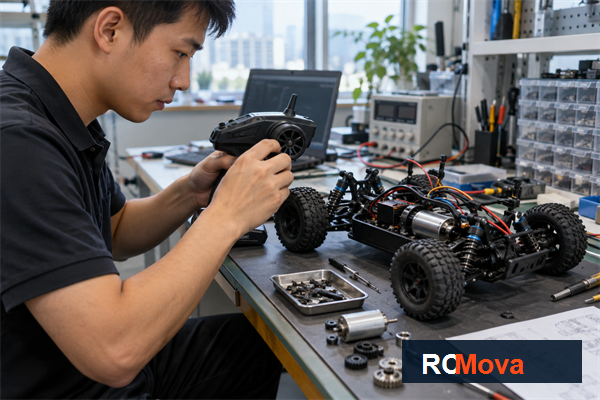
Article hero image — After the opening section
Image title: RC Toy Screw Torque and Fastener Retention — RC toy sourcing overview
Caption: Controller selection should be tested as part of the complete vehicle and user experience. Article focus: rc toy screw torque.
ALT text: Asian electronics technician testing an RC controller and vehicle components; rc toy screw torque buyer guide
Image size: 600 × 400 px
AI photography prompt: Documentary commercial photography for RC Toy Screw Torque and Fastener Retention, realistic RC toy products and Shenzhen factory setting, Asian staff if people appear, natural light, authentic details, no invented certificates, no text overlays, 3:2 landscape
In-article supporting image — Before the FAQ section
Image title: RC Toy Screw Torque and Fastener Retention — RC toy quality and shipment check
Caption: Production review for rc toy screw torque before the export handoff.
ALT text: Asian quality team reviewing rc toy screw torque with a remote control toy at the factory
Image size: 600 × 400 px
AI photography prompt: Realistic editorial photography showing a buyer checking rc toy screw torque against an RC toy sample and shipment records, Asian staff if people appear, natural industrial lighting, no text or fabricated logos, 3:2 landscape
Frequently Asked Questions
What should buyers check first about identify critical joints?
Rank fasteners by their effect on accessible parts, battery access, steering, wheels, chassis and electronics protection. Not every cosmetic screw needs the same control as a battery-cover or wheel-retention fastener. Create a visual map with screw type, length and location. Similar screws should be differentiated by bins or poka-yoke where a mix could damage the product. Involve product-safety expertise when a loose part could create a hazard for the intended age group.
How should buyers verify design the work sequence?
Make fasteners accessible and specify order when tightening one area can distort another. A clear sequence reduces missed screws and cross-threading. Use fixtures or visual work instructions when the product has several similar locations. Count control can help, but a correct count does not confirm correct screw placement. Line checks should include seating and product function, not only whether every hole appears filled.
What should be confirmed before shipment?
Check accessible covers, wheels and structural joints for looseness, damage and correct function. A final inspector should not retighten products indiscriminately because that can hide process evidence or strip parts. Record the observed condition and affected sample. If loose fasteners are found, expand containment based on risk and lot structure, investigate the assembly process and agree disposition before shipment release.
Conclusion: turn the decision into a working plan
Identify critical fasteners, validate joint-specific settings and inspection methods, and control drivers, rework and records throughout the production run. When the selected product, sample, documentation, inspection points and shipment handoff are visible, the buying team can move with greater confidence and fewer avoidable changes.
Send Your Requirements